Class Notes with LINE: Record the Whole Lecture, Review Only the Key Points
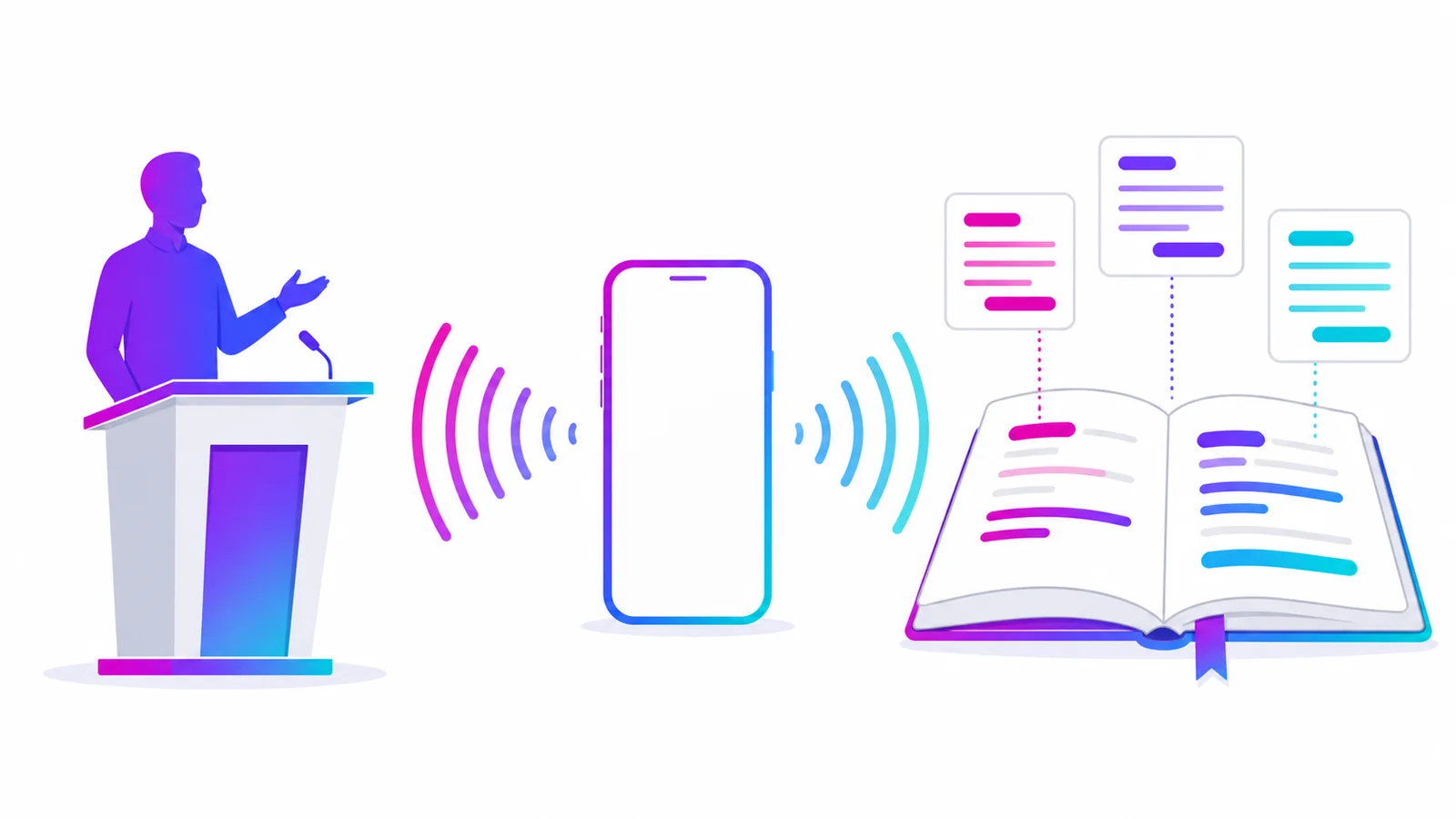
Taking class notes with LINE is simple: record the lecture, and after class send the audio to the AIMochi official account. The system returns a transcript and generates a summary, and you can then ask the note questions directly. All that's left for you to do in class is understand.
Copying notes word for word costs more than you think
The real cost of handwritten notes is usually not time but attention: while you are busy transcribing, it is hard to follow the reasoning that comes next. The common outcome is a notebook that looks tidy but reads as fragments — the crucial "why" never got written down. Letting AI do the word-for-word capture while you keep the understanding is the saner division of labour.
How to do it: three steps
1. Record. LINE's built-in recorder or any phone recording app works; place the phone close to the speaker. Microphone distance, background noise and echo all affect recognition quality.
2. Send it to AIMochi. After class, send the audio file to the LINE official account; for long files, /upload in LINE on desktop is easier. Processing takes roughly one sixth of the audio length — a 50-minute lecture comes back in about 8 to 9 minutes.
3. Organise and revise. Read the summary first for the structure, then dip into the transcript for details; seminar-style discussions automatically label up to 10 speakers. Details in the LINE voice-to-text guide.
The three most useful features when revising
Ask the note directly: "What weighting did the professor give the final report?" beats digging through folders.
Find similar notes: connect the same topic across different weeks.
Rewrite into other formats: the built-in Claude model can rewrite one transcript into more than 10 content formats, depending on what you need.
Is the free quota enough?
Voice-to-text costs 10 points per minute, and the 3,000 free points per month cover roughly 300 minutes — with one 75-minute lecture a week, four lectures need about 3,000 transcription points plus the per-event points, which is just about a full month's free quota. For a heavier course load there is the Basic plan at NT$299/month (18,000 points, roughly 1,800 minutes). See the points guide.
FAQ
Q: What if the lecturer has an accent or mixes in English terms?
The system detects the language automatically, and lectures that mix Chinese and English still transcribe; treat specialist terms as your first proofreading priority.
Q: Do I need permission to record a lecture?
Yes. Check the school rules and course announcements first, and get appropriate authorisation or consent from the lecturer, speaker or organiser. If classmates' contributions or other identifiable content will be captured, give the required notice and make sure you have a lawful basis. In Taiwan, recording another person's non-public conversation without cause may fall under Article 315-1 of the Criminal Code, and collecting and using personal data is governed by the Personal Data Protection Act — for specific cases, follow your school's rules and seek professional legal advice.
Conclusion
Give the "copying" to AI and keep the "understanding" for yourself — that is the best use of a lecture recording. Add the AIMochi official account and record your next class; to see what else AI notes can do, read the beginner's guide to AI notes.